


Most of the metals are naturally available in a chemically shared condition which we know as ORE. It is very usual to get an oxide, a carbonate, a sulphide or another compound in nature. In another words, we can say that most of the metals are naturally available in a mixed state. The reason for this mixed/compound condition is their low energy states as ores or other compounds. In order to take apart a metal from its ores, (for ex – Ferrous oxide), it is required to provide a huge amount of energy. This is achieved by heating with the help of a reducing agent in a blast furnace upto 1600 °C. Pure Metals are normally in high-energy states.
According to Thermodynamics, there is a strong tendency of elements having high energy state to transform into low energy states. It is why, metals recombine with other elements easily available in the environment which in turn further leads to the process of corrosion. The most common type of corrosion is Oxidation Corrosion.
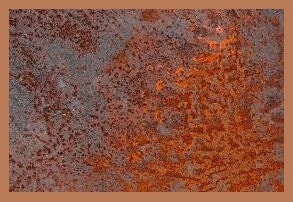 In case of metals, they react with belligerent kind of other elements to form stable metallic oxides. This type of reaction is called Oxidation corrosion. So, we can say that Oxidation corrosion is the degradation of a metal from high energy state to low energy state by an electrochemical reaction with its environment.
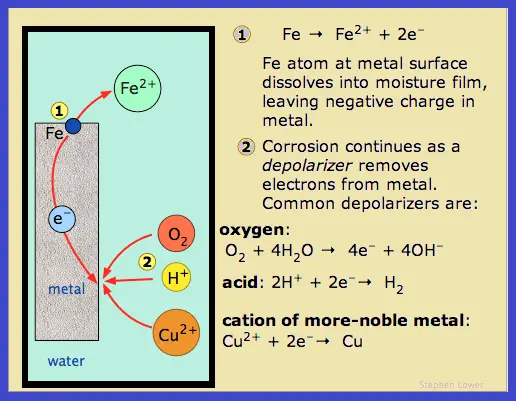 Oxidation Corrosion mostly occurs in two common ways:
(a)Â Â Â Â over the entire surface of the metal i.e Generalised oxidation Corrosion
(b)Â Â Â Â in local spots or areas called pitting i.e Localised oxidation Corrosion
-
Generalized Oxidation Corrosion:Â
This uniform corrosion over the entire surface of the metal is very rare. It results in overall thinning of the metal which has little effect. It happens only in acidic conditions.
-
Localised Oxidation Corrosion:
The most common and the most affecting form of localised oxidation corrosion is pitting. Pitting is so called as this oxidation corrosion happens in only one single location on the surface and creates a pit or small cavity. This type of oxidation corrosion attack is hard to prevent and difficult to detect before structural failure is met due to cracking. Pipes are the usual victims and most often compromised due to pitting.
egcq6v
I always was concerned in this subject and still am, thankyou for posting.
Very interesting information!Perfect just what I was searching for!
Wow! Thank you! I constantly needed to write on my website something like that. Can I include a fragment of your post to my site?
Of course, what a fantastic blog and educative posts, I will bookmark your blog.Best Regards!
Hello there, I discovered your blog by means of Google whilst looking for a comparable matter, your website got here up, it looks good. I’ve bookmarked it in my google bookmarks.
I have learn a few just right stuff here. Definitely worth bookmarking for revisiting. I surprise how so much attempt you put to make this kind of excellent informative website.
Magnificent beat ! I would like to apprentice at the same time as you amend your web site, how could i subscribe for a weblog site? The account aided me a applicable deal. I have been a little bit familiar of this your broadcast offered shiny clear concept
You made several fine points there. I did a search on the matter and found the majority of persons will agree with your blog.
Yay google is my queen assisted me to find this outstanding website ! .
Can you be more specific about the content of your article? After reading it, I still have some doubts. Hope you can help me.
Excellent post. I used to be checking continuously this blog and I’m inspired! Extremely useful information specially the remaining part 🙂 I care for such info a lot. I used to be seeking this certain info for a long time. Thank you and best of luck.
roseville pest control [url=https://otvetnow.ru]https://otvetnow.ru[/url] web usage tracking software
An impressive share, I just given this onto a colleague who was doing a little analysis on this. And he in fact bought me breakfast because I found it for him.. smile. So let me reword that: Thnx for the treat! But yeah Thnkx for spending the time to discuss this, I feel strongly about it and love reading more on this topic. If possible, as you become expertise, would you mind updating your blog with more details? It is highly helpful for me. Big thumb up for this blog post!
I am commenting to let you understand of the terrific encounter my wife’s child experienced visiting your web page. She came to find so many pieces, which included what it is like to have a wonderful teaching mindset to get the mediocre ones completely thoroughly grasp a number of very confusing things. You truly did more than our expectations. Thank you for rendering these useful, safe, edifying and also cool guidance on this topic to Evelyn.
Interesting blog! Is your theme custom made or did you download it from somewhere? A design like yours with a few simple tweeks would really make my blog jump out. Please let me know where you got your design. Bless you
There are definitely numerous particulars like that to take into consideration. That may be a nice point to carry up. I provide the ideas above as normal inspiration but clearly there are questions like the one you convey up the place crucial factor shall be working in sincere good faith. I don?t know if greatest practices have emerged around issues like that, but I am positive that your job is clearly identified as a fair game. Both boys and girls feel the affect of only a second’s pleasure, for the rest of their lives.
My brother suggested I might like this website. He was once entirely right. This post truly made my day. You can not imagine simply how a lot time I had spent for this information! Thank you!